Head-to-Head
Nudge vs. Obsidian
Nudge spots new app sign-ups from email signal. Obsidian shows your SOC what's happening inside the apps your business actually runs on.
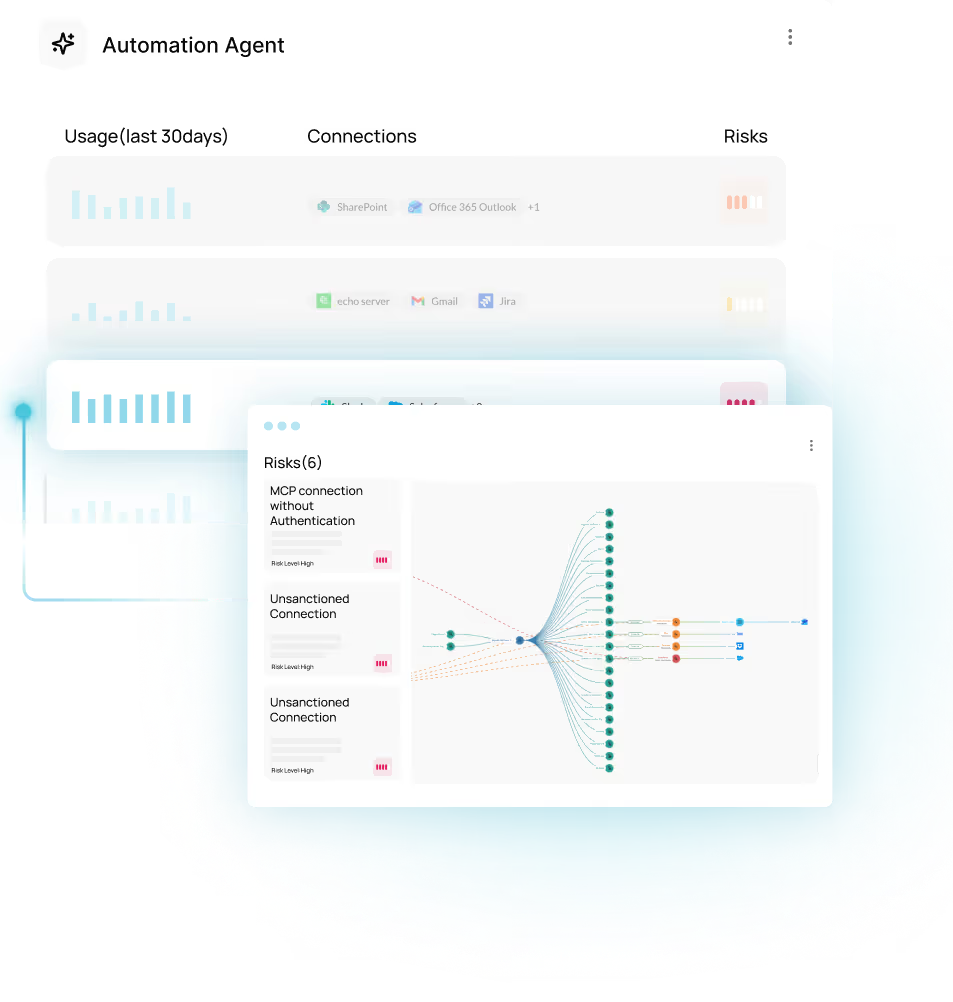
Nudge spots new app sign-ups from email signal. Obsidian shows your SOC what's happening inside the apps your business actually runs on.








Because discovery is only the starting point. Obsidian gives security teams visibility into what’s happening inside the SaaS and AI apps their business actually runs on: identities, activity, integrations, data movement, and agent behavior. That’s how teams move from knowing a tool exists to detecting, investigating, and closing real SaaS incidents.
Yes. Obsidian discovers shadow SaaS and AI through direct integrations with 200+ apps plus browser telemetry, then layers identity, activity, integration, and policy context on top. Discovery is part of the platform, but the real value is what Obsidian does next: runtime detection, identity threat response, integration-risk investigation, and AI agent governance.
Obsidian’s detections run continuously against activity inside sanctioned SaaS apps, tuned on 500+ real SaaS incident response engagements. That means the SOC can see what was accessed, by whom, through which session, token, integration, or agent, and across which downstream systems.
Obsidian ties integrations to identity, activity, and data movement across connected apps. When a third-party app or integration is compromised, the SOC can trace which records were touched, which identities were affected, how access spread, and where the blast radius landed.
Obsidian secures AI agents as part of the broader SaaS control plane. Teams get agent discovery, runtime activity context, and policy enforcement over what agents can access and do inside business-critical apps.
99.99% uptime over the last 12 months. Regional hosting across the US, Europe, Saudi Arabia, and Australia. Granular RBAC scoped per app. Production-safe connectors with bulk-API support. Obsidian connects to your most critical SaaS apps and collects activity data without disrupting them. Learn more about our certifications and attestations.
These insights come from real customer evaluations where Obsidian and Nudge were evaluated head-to-head.