Frontier AI Defense
Frontier models chain low-risk findings across your third-party apps into a breach, in hours. Obsidian finds the paths that reach your data, and the few fixes that break them.
From noise to the fixes that matter
4,000
findings
4
fixes that break every path
What changed
For twenty years, dormant tokens and forgotten admin rights were safe to defer, because exploiting them took a skilled team weeks. A frontier model now does it in hours, cheaply enough to run against everyone.
Time to find and chain weaknesses
Weeks Hours
Recon to execution runs without a human. Attackers pay for compute, not talent.
Third-party exposure that survives a year
5x
worse than known exploited vulnerabilities. There’s no patch and often no owner.
Zero-days needed
Zero
Every hop exploits access that already exists: a token, a grant, an admin role.
The response has to be economic too:
Lower your cost of defense. Raise the attacker’s cost. Cap what a foothold is worth.
The bigger risk
Frontier models will find more vulnerabilities, and your patch process is built for that. What it isn’t built for: chaining low and medium findings across third-party apps into one route to your data.
One CVE, one patch, one owner. Your existing tools and processes already handle this curve.
No patch, no single owner, spread across identity, privilege and data in apps you don’t run. This is where frontier AI changes the math.
One phished login, four hops, critical impact
Identity
Phished user, weak MFA
Alone: LowPrivilege
Ghost admin reads a key in code
Alone: MediumPrivilege
One key exposes every shared secret
Alone: MediumData
Secrets open source code and connected apps
Alone: LowStitched
Critical
Each hop sat in somebody’s queue, rated low or medium. No exploit, no zero-day. Across a typical estate, there can be thousands of paths like this one.
The Frontier Funnel
Attack paths share choke points. Obsidian composes every finding into the routes an attacker’s AI would take, then ranks the changes that break the most paths with the least disruption to the business.
4,000
findings investigated
compose →
164
combinations that co-occur
simulate · rank →
7
attack paths that reach impact
fix →
4
changes that break every path
Most risk cut, least disruption
Fix 1
Require phishing-resistant MFA on one identity provider group
Fix 2
Revoke one dormant admin credential
Fix 3
Reduce one integration’s privilege
Fix 4
Close one public link to sensitive data
How it works
Three moves, each aimed at one side of the economics.
Discovery · lowers your cost of defense
Compose every finding across identity, privilege and data into the routes an attacker’s AI would take, and see which ones reach your data.
4,000 paths, mapped and ranked
Governance · raises the attacker’s cost
Rank fixes by how many paths each one breaks, with the least disruption to the business. Each recommendation shows exactly which paths it cuts.
4 fixes that break the most paths
Enforcement · caps the cost of impact
Detect a violation and revoke just the access involved, so a foothold is worth less and the business keeps running.
Hours, not weeks
The Obsidian Knowledge Graph reads each app from the inside: who the identities are, what they can really do once roles, groups and sharing resolve, which tokens and integrations exist, and what data sits behind them. It all lands in one live graph, which is how we see paths instead of lists.
Report progress
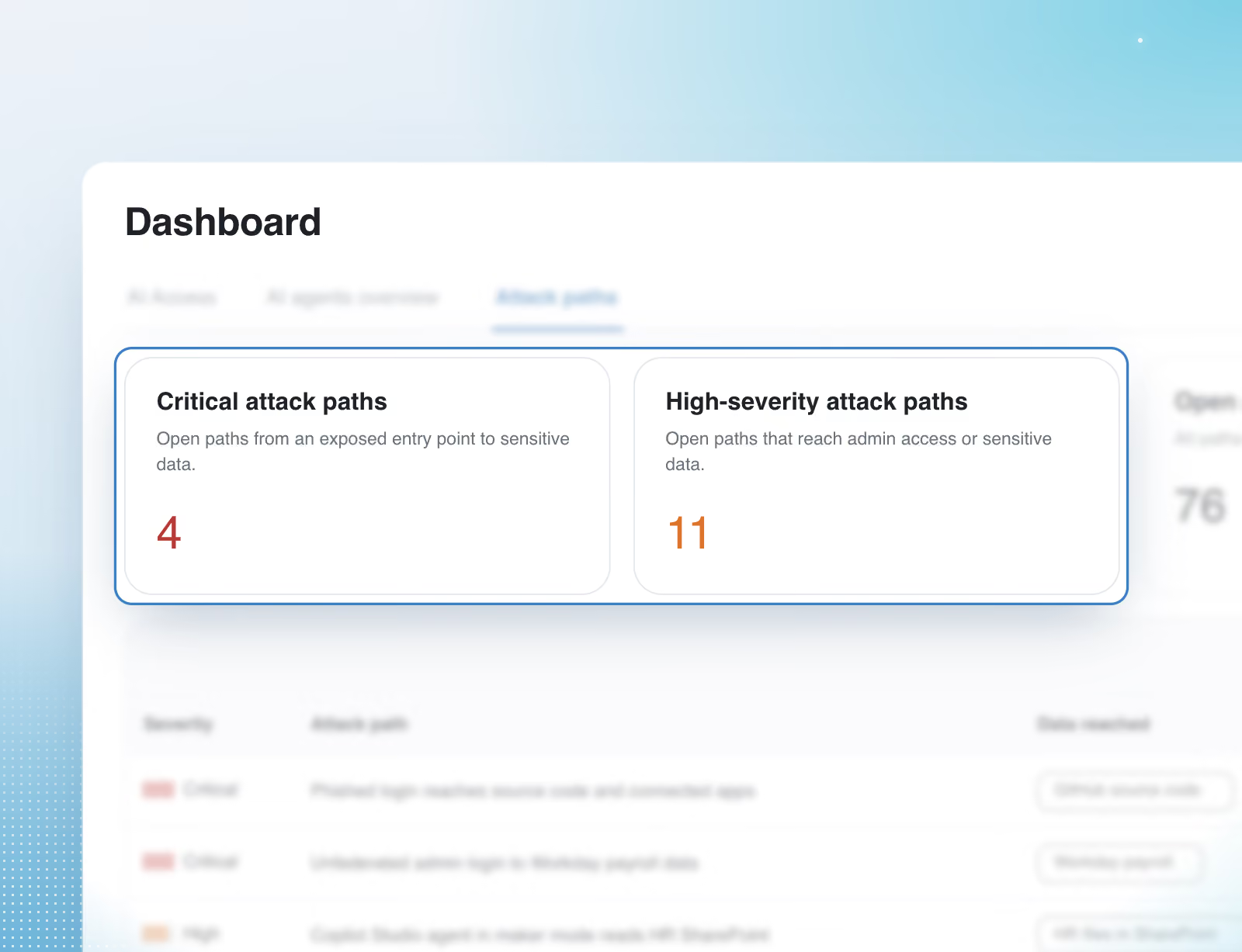
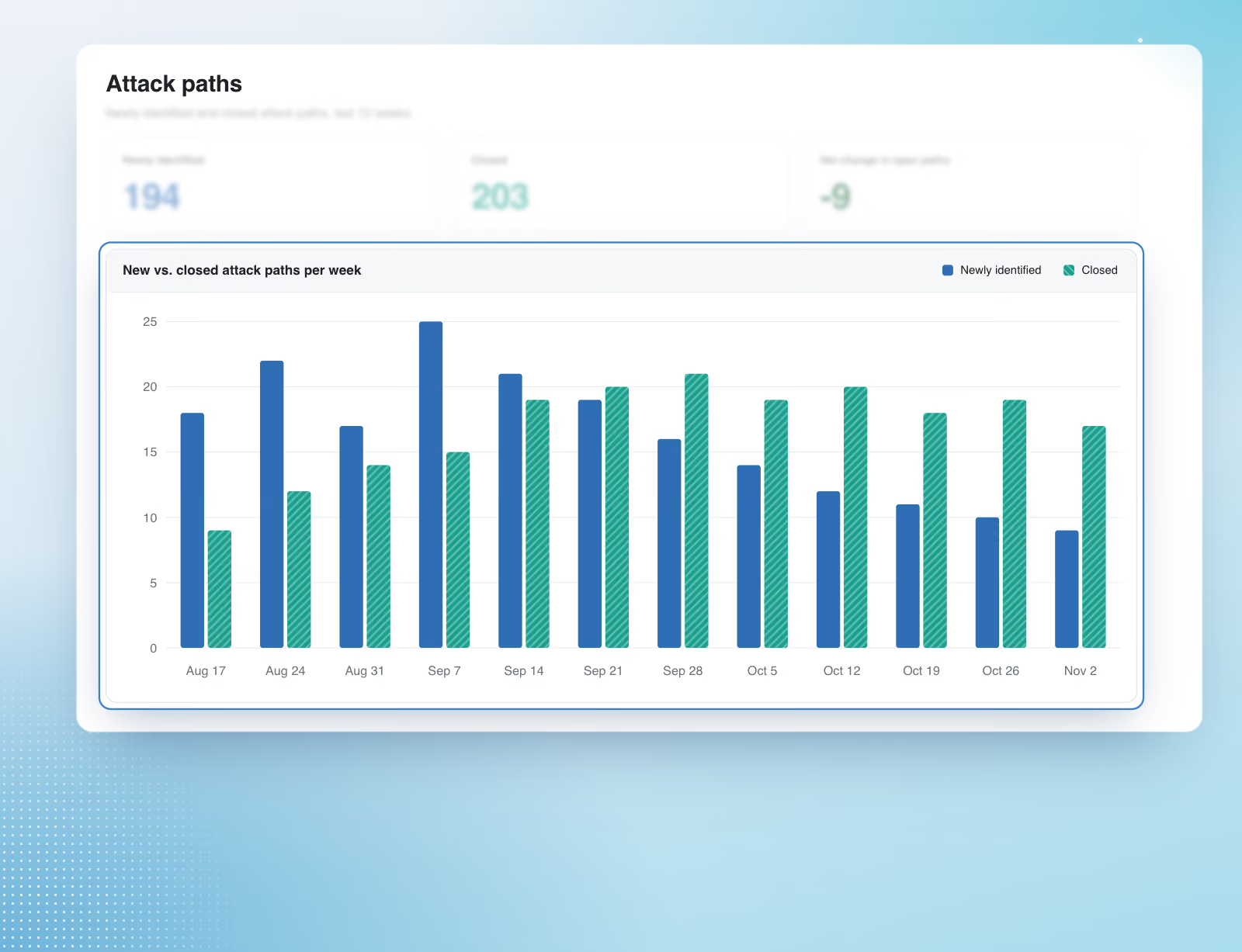
When the board or your CISO asks “are we exposed?”, answer with data. Obsidian tracks every attack path over time, so you can show where risk stands today and how fast you’re cutting it.
See the metrics to reportWhere exposure stands right now, by severity and by the data each path reaches.
Whether you’re cutting paths faster than new apps, grants and identities create them.
Always on
Your estate changes every day: new apps, grants, identities and agents. So does the attack. A point-in-time review is stale the day it’s delivered.
Every
day
Catch what changed after you said yes
We baseline every app and integration, then flag new scopes, privilege creep and unusual activity, like an integration suddenly pulling far more data. When something drifts, the blast radius is recomputed automatically.
One customer’s attack, everyone’s early warning
We see anonymized signals across every connected customer. A technique that shows up in one estate becomes a detection in yours, often before the vendor discloses, so you hear about fast-moving AI threats as they form.
Obsidian AI
A frontier model chains a path in hours. Change control can take weeks. Obsidian AI closes that gap.
Investigates each path and what it reaches
Proposes the fix, with the paths it breaks
Applies it at machine speed, at the level of approval you set, and verifies it held
Built for third-party app security from day one, not adapted to it. Trusted at Fortune 100 scale, including 2 of the 5 largest U.S. banks.

“We don’t want noise — we want answers. Sixty to seventy percent of what our team acts on every day comes out of Obsidian. That tells you everything.”
Joseph Gothelf, VP of Cybersecurity, Wyndham Hotels & Resorts
How is this different from vulnerability management?
Vulnerability management ranks findings one at a time. Obsidian connects findings across identity, privilege and data in your third-party apps into attack paths, then ranks the fixes that break the most of them.
Do we have to fix every finding?
No. Paths share choke points, so a handful of changes can break most of them. Obsidian shows which changes those are and what each one cuts.
Will Obsidian change things without approval?
Only at the level of autonomy you choose. Obsidian AI can propose fixes for your team to apply, or apply them with your approval.
How does this relate to AI Agent Security?
They’re two sides of the same problem. Frontier AI Defense breaks the paths an attacker’s AI could chain. AI Agent Security decides what your own agents may do with the access they hold.