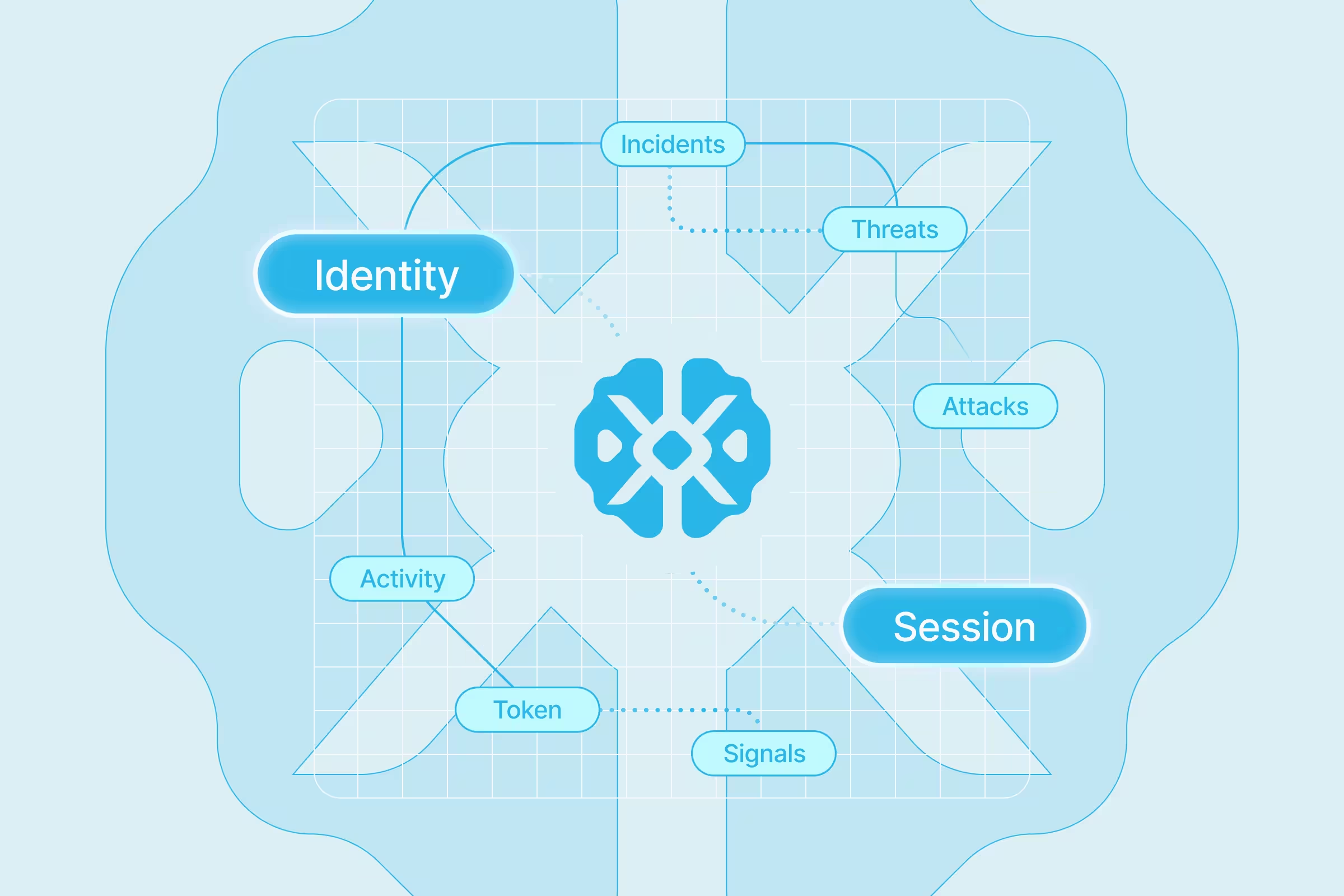
Every application defines security differently. Obsidian brings supported configurations, identities, permissions, and activity into one control model, so you catch gaps and get them fixed.
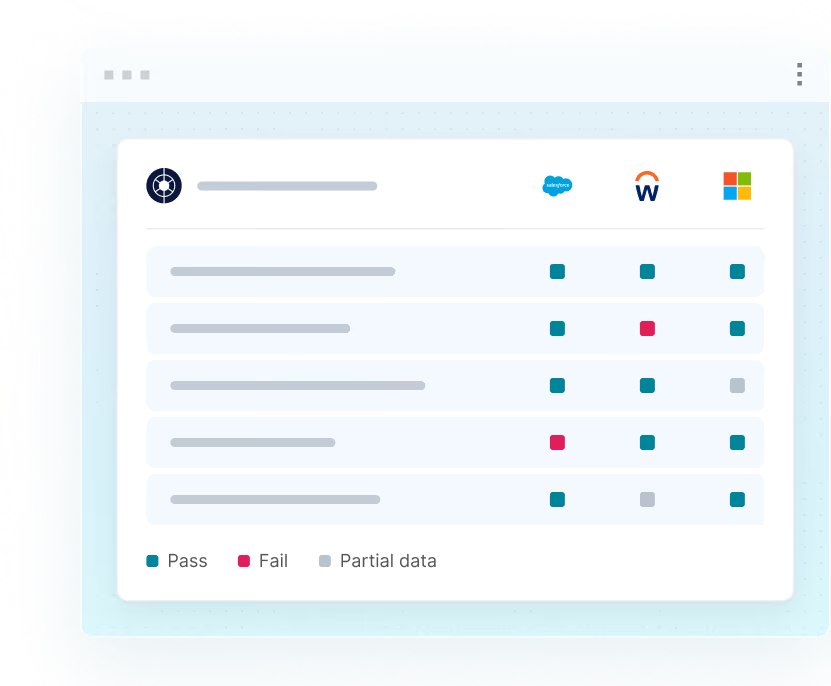
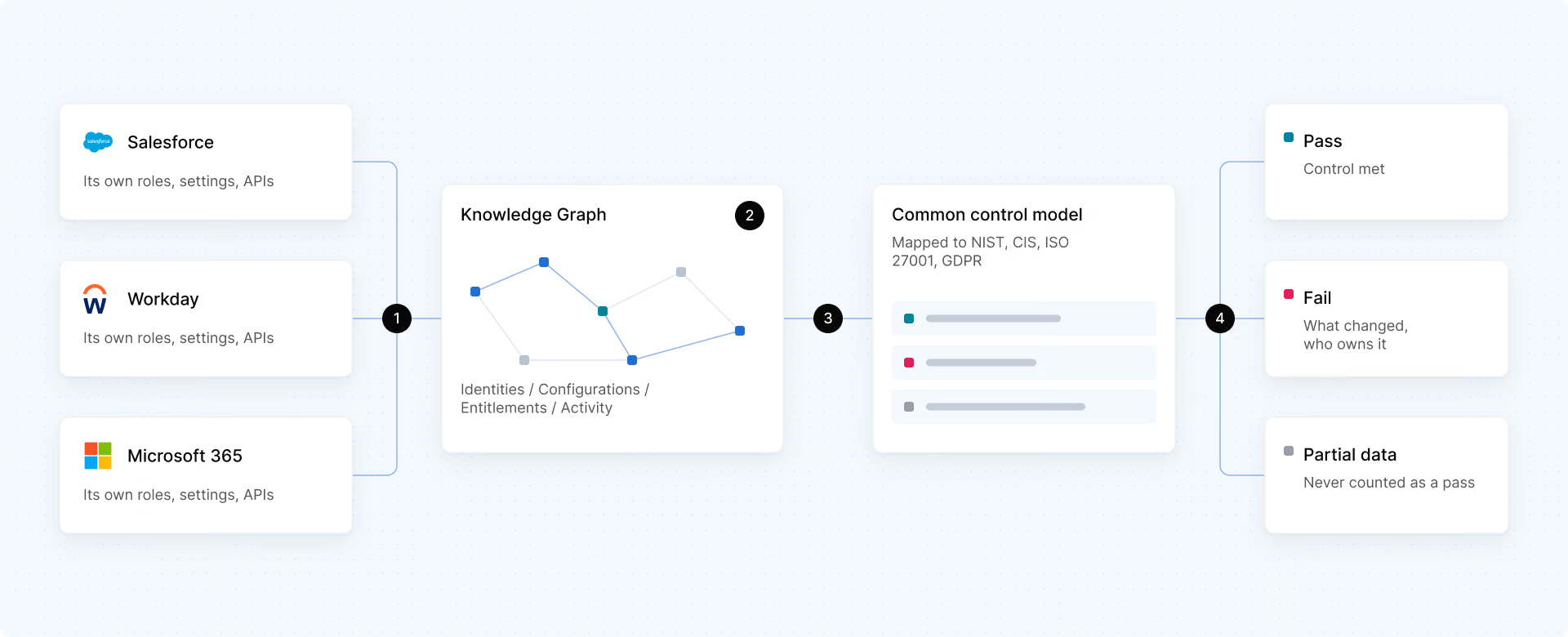
Your security team sets the rules, but each application holds the settings that decide whether they’re met.
Governing each application on its own
With Continuous Governance


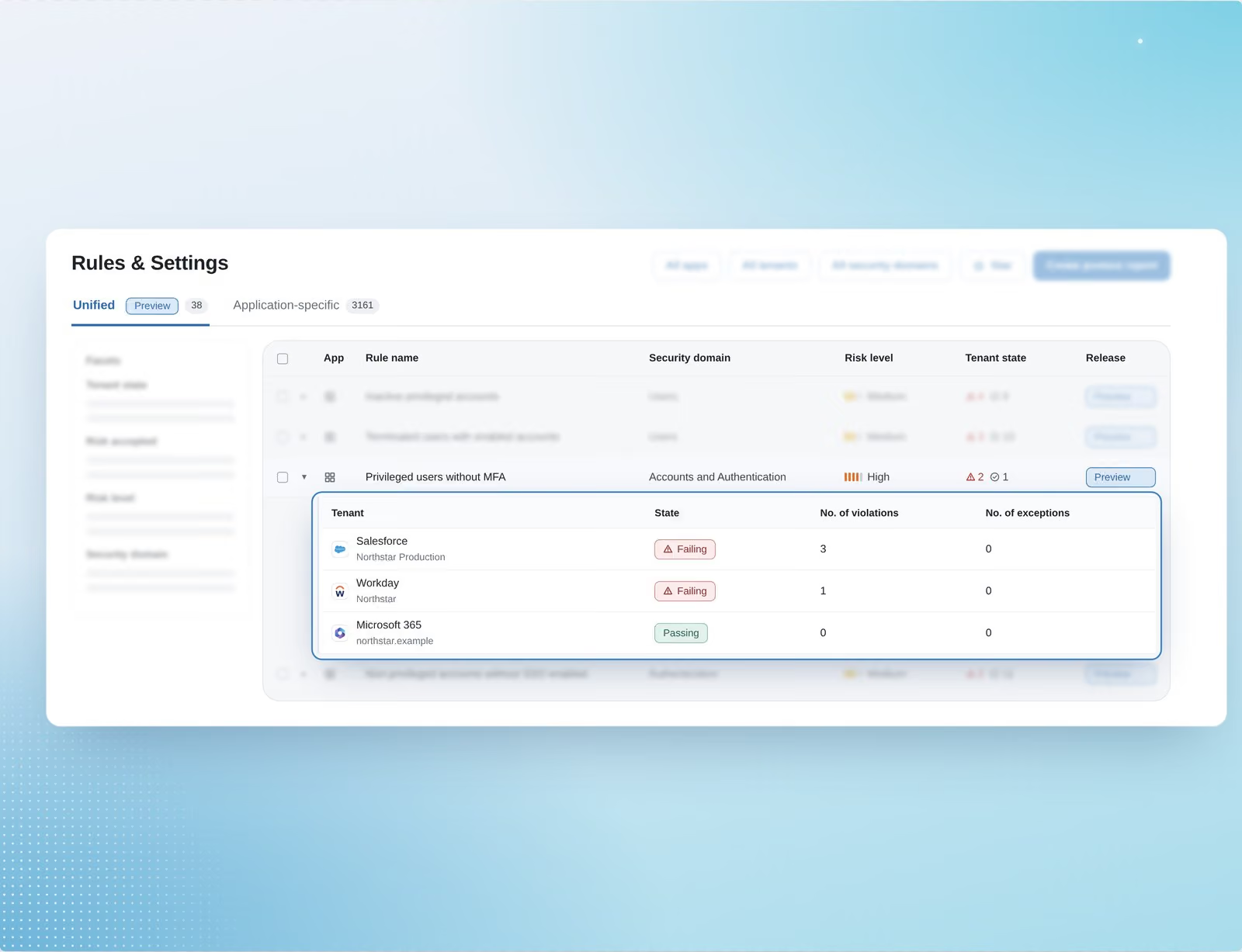
A privileged account looks different in Salesforce, Workday, and Microsoft 365. You write each requirement once, and Obsidian checks it in each connected app that exposes the data it needs.

Salesforce Agentforce, Databricks, GitHub, Microsoft 365, Snowflake, ServiceNow, and Workday now ship their own agents. Many arrive switched on, and users can build more inside the app, often with no security review.


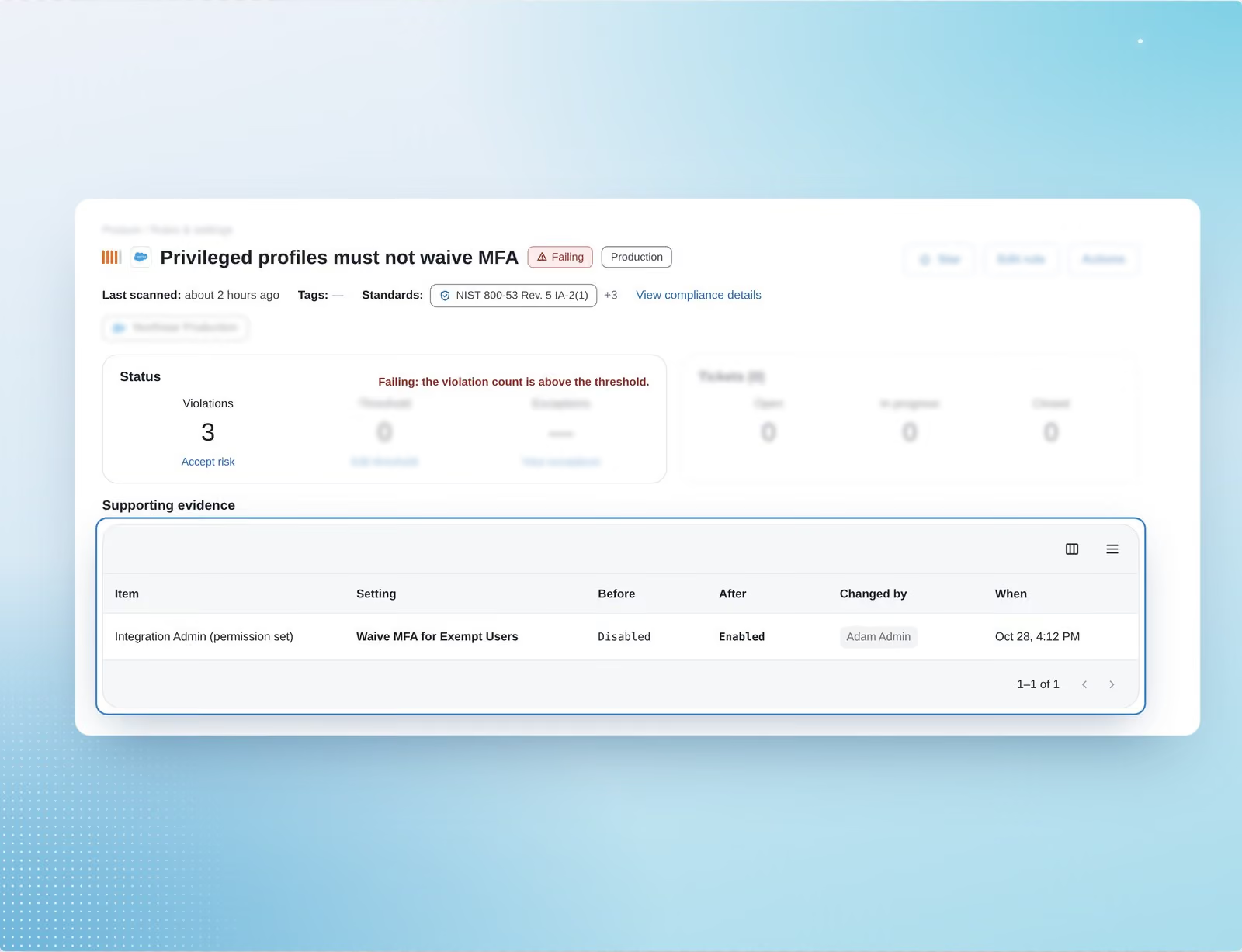
Continuous Governance assesses how your applications, and the agents built into them, are configured, and helps your team fix what fails. The Runtime Policy Decision Engine checks individual AI agent actions at runtime, before they run.
NIST, CIS, ISO 27001, GDPR, and applicable regional frameworks.
Obsidian marks the control as partial or unavailable. Missing evidence never counts as a passing control.
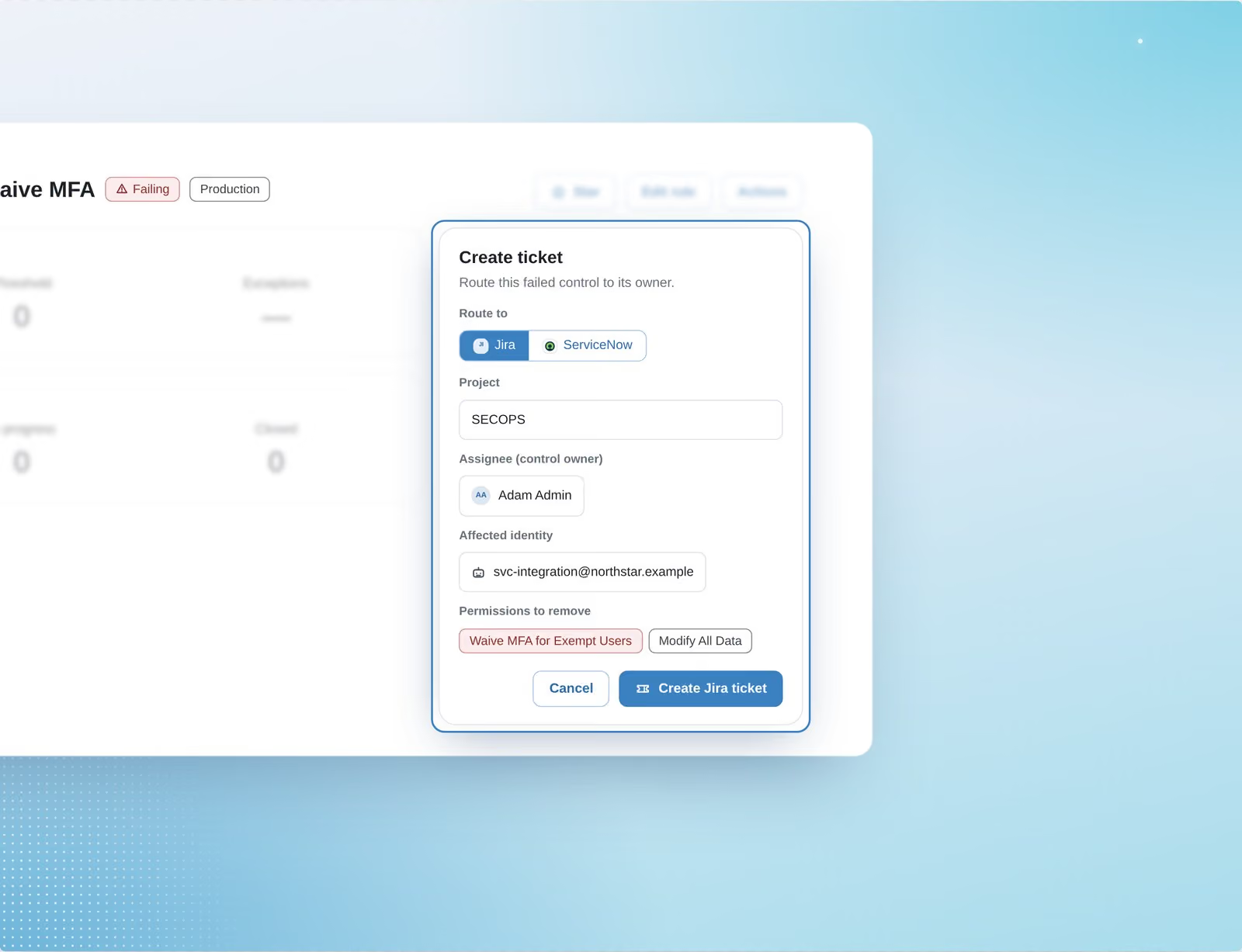
No. Route fixes through your existing workflows, including Jira, ServiceNow, and other supported tools.
No. Your team finds supported control gaps as part of everyday security operations. When an audit does arrive, you already have a process for reviewing control status, investigating exceptions, and gathering available evidence.