Supply Chain Security
Secure the third party integration foundation your business runs on
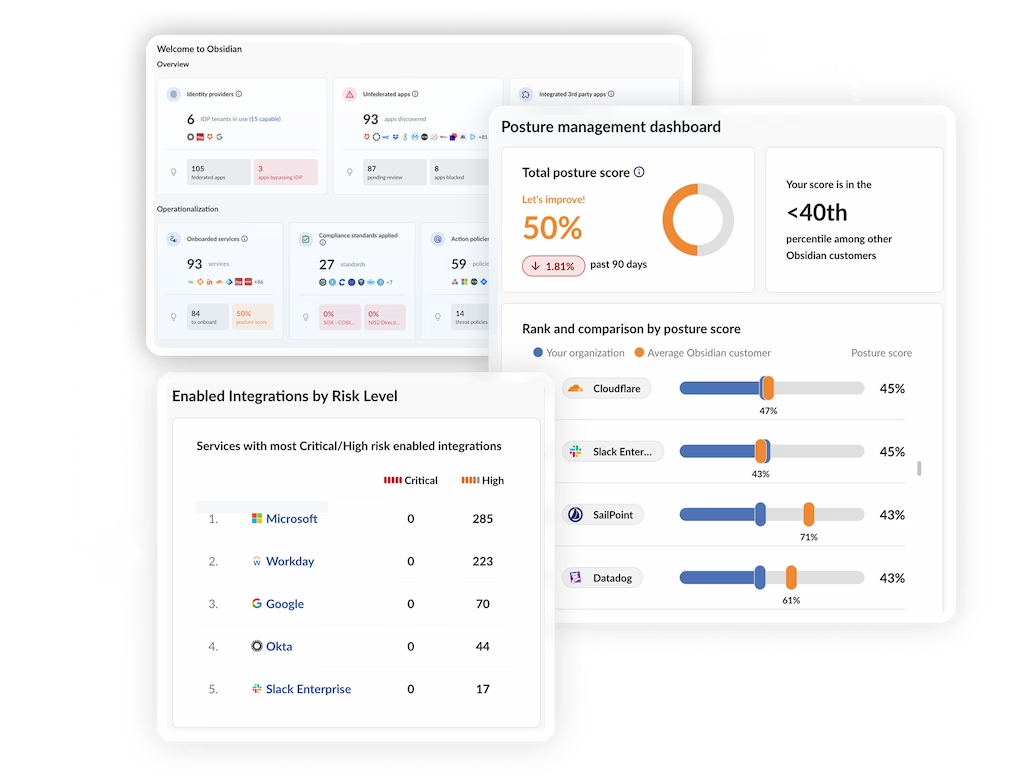
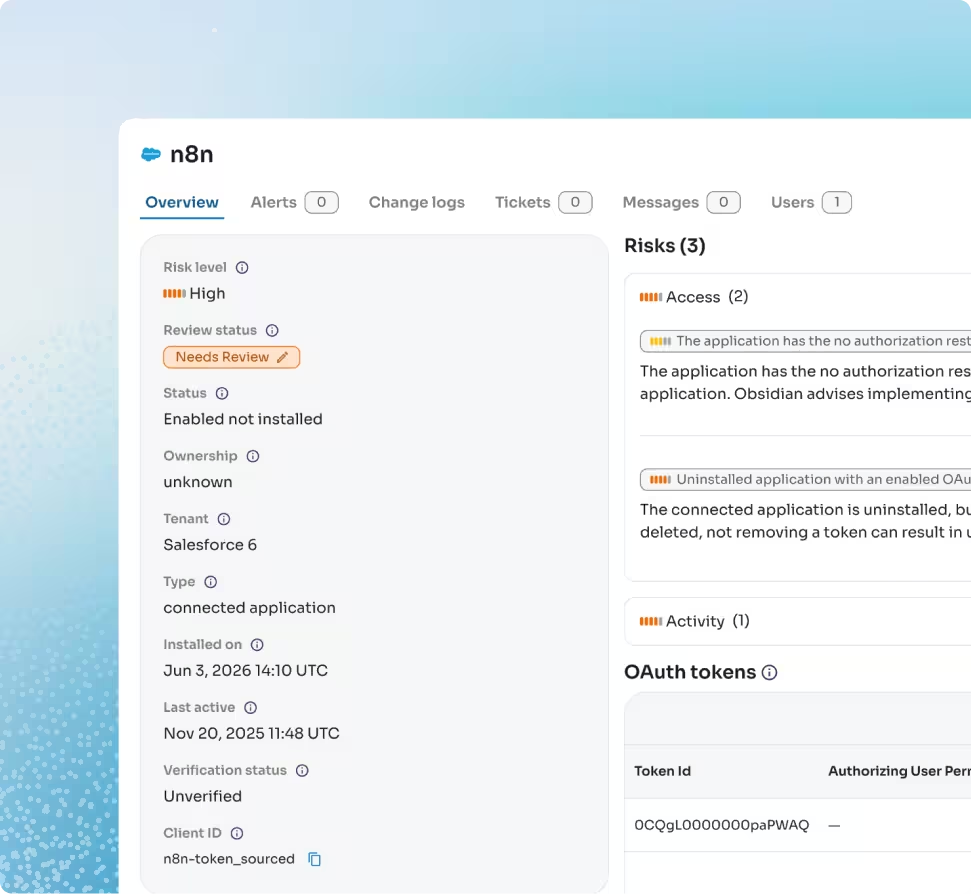
Discover every integration, govern integration risks and contain the blast radius before vendor breach disclosures.
Discover every integration, govern integration risks and contain the blast radius before vendor breach disclosures.








Every shadow app and vibe-coded integration your teams ship adds a new entry point attackers can exploit. Frontier AI models like Mythos have made that exploitation trivially easy and without continuous visibility, a vendor disclosure is your only warning system.
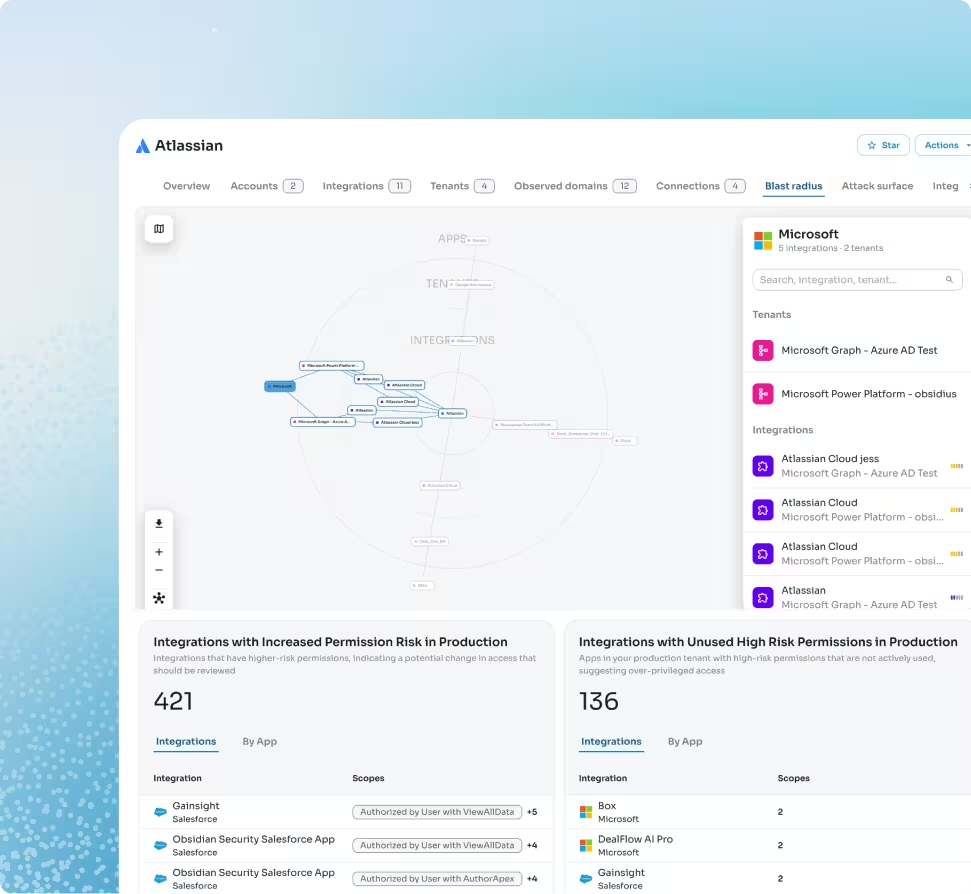
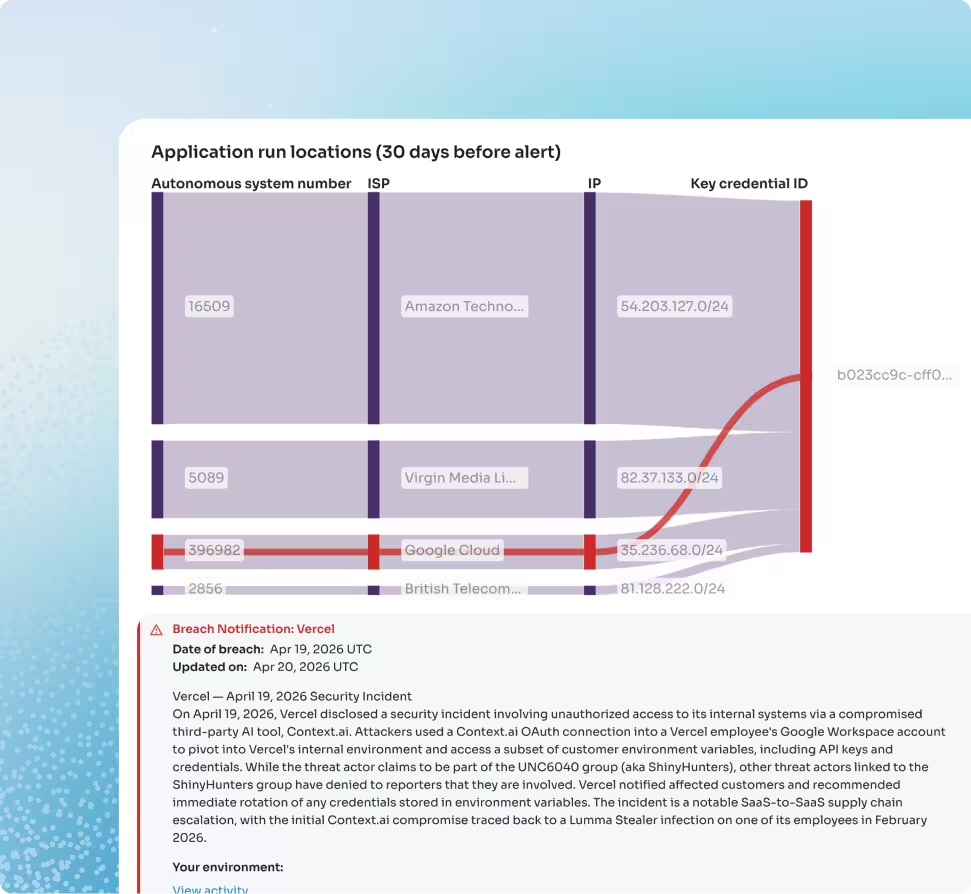
Discover every integration, govern it by real risk, and and respond before a vendor breach becomes your breach
.avif)
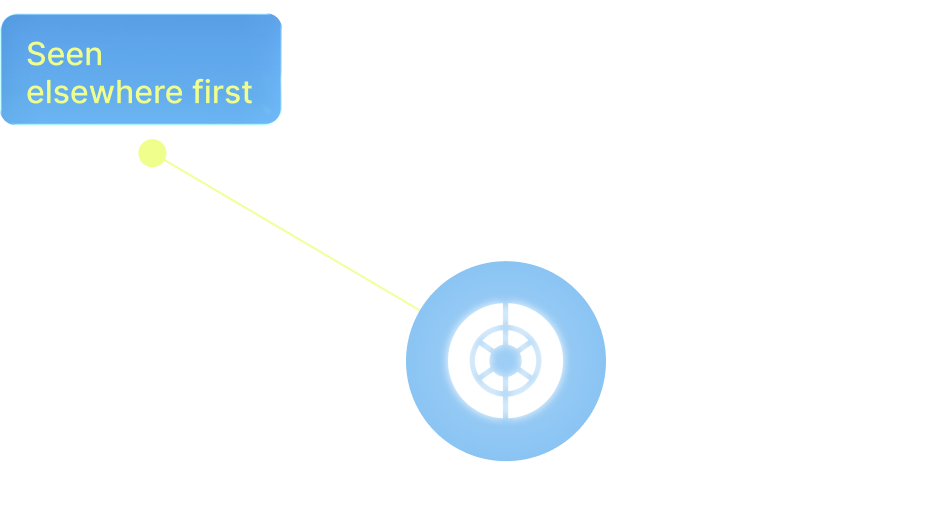
When a new attack pattern or compromised integration is detected anywhere in our network, that signal immediately protects every other customer — before the same threat reaches them. Obsidian combines real-time activity across hundreds of enterprise environments with the industry's most comprehensive breach intelligence database, so detection sharpens automatically as the network grows. The result: threats flagged in minutes, not weeks, with no additional work on your end.




A SaaS supply chain is the ecosystem of cloud applications, their APIs, integrations, and third-party SaaS services your organization uses to automate workflows and share data. Each connected service represents a potential entry point for attackers, making supply chain security essential.
A supply chain attack occurs when threat actors compromise software vendors and pivot using stolen API keys or other integrations to gain access to a target organization. In SaaS environments, this often involves stolen tokens, hijacked OAuth connections, or compromised third-party apps.
Organizations can strengthen supply chain attack protection by gaining full visibility into every SaaS and AI integration across the business. Using SaaS supply chain software such as SSPM (SaaS Security Posture Management), security teams can detect misconfigurations, monitor OAuth and API access, and enforce least-privilege policies.
Risks include unauthorized access via third-party integrations, breaches via shadow SaaS, stealthy data exfiltration, and instant lateral movement between platforms. These risks increase with each unmonitored or ungoverned SaaS connection.
Security platforms like Obsidian provide supply chain attack protection through SaaS Security Posture Management (SSPM), visibility into SaaS integrations, misconfiguration detection, and threat response. These tools are critical for reducing SaaS supply chain risk.
A SaaS attack can spread in minutes. After a SaaS supply chain breach, attackers may move laterally within 9 minutes, making rapid detection vital.
SaaS Supply Chain Management (SaaS SCM) involves identifying, monitoring, and securing all connected SaaS, API, and AI integrations. Effective SaaS SCM reduces risk exposure, enforces least-privilege access, and prevents unauthorized lateral movement across cloud applications.
Key SaaS supply chain security best practices include discovering all SaaS and AI integrations, removing unused tokens and shadow apps, enforcing least-privilege access, and using centralized SaaS security platforms for monitoring and control.
An OAuth token compromise occurs when attackers steal or abuse access tokens issued to third-party SaaS integrations, browser extensions, or AI apps. Instead of targeting a human user’s password, adversaries exploit the trusted connection granted by OAuth to move data, escalate privileges, or maintain persistence inside a SaaS environment. Because these tokens and API keys are not standardized and bypass MFA with broad permissions and scopes, they represent one of the most critical risks in SaaS supply chain security.
In OAuth token attacks in SaaS supply chains, attackers steal valid tokens from compromised integrations to impersonate trusted applications. Token hijacking happens when adversaries intercept active tokens during transmission or through malicious third-party integrations. Replay attacks occur when a stolen or captured token is reused to repeatedly access SaaS data and workflows without detection. Each method exploits the trust placed in OAuth tokens, allowing attackers to bypass MFA and traditional security controls.
Network effects mean that every customer on the Obsidian platform makes every other customer safer. As Obsidian monitors more enterprise environments, it builds a clearer picture of what normal integration behavior looks like and gets faster at spotting when something isn't. So when a threat pattern appears in one customer's environment, every other customer is automatically protected before the same attack reaches them. The more environments we see, the smarter and faster the detection gets for everyone on the network.