AI Agent Security
Let AI agents move fast. Keep their actions in check.
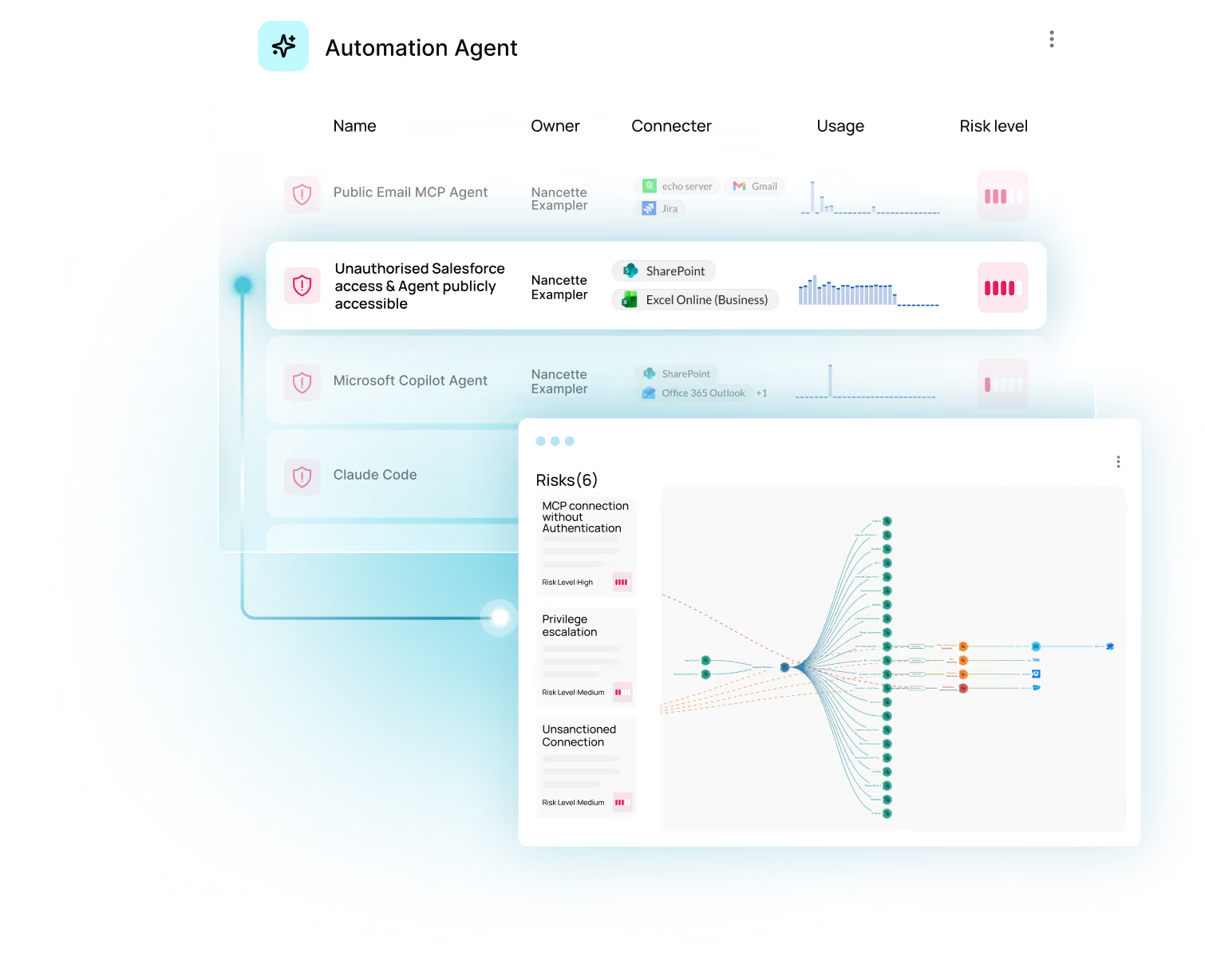
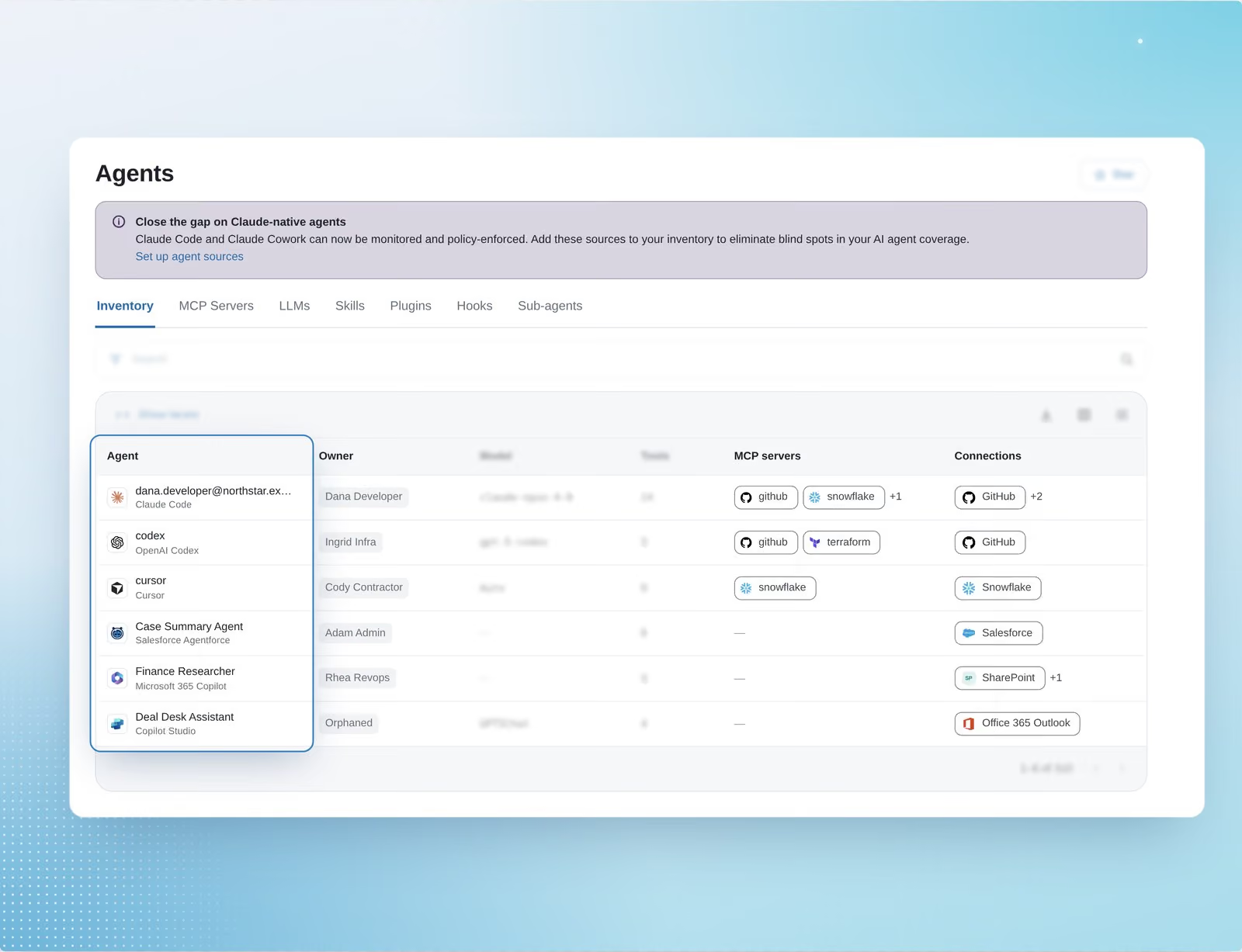
Discover what’s running across your enterprise, see what it can access, and enforce policy before it acts.
Trusted By


Discover what’s running across your enterprise, see what it can access, and enforce policy before it acts.
They work with an employee’s access, so one wrong move can expose sensitive data, escalate privileges, or disrupt critical systems.
Without Obsidian
With Obsidian
A developer tells a coding agent to “clean up the test database.” It runs DROP TABLE, and no one signs off.
You stop Copilot from reading salary data. The same person’s coding agent pulls it through a Workday MCP connection.
A gateway waves the request through. It doesn’t know the user was off-boarded yesterday or is a contractor.
Supported actions are checked against your policies before they reach the app.
Write each policy once. Enforce it across every application.
Every decision weighs available identity, HR, and app context, plus your own data labels.
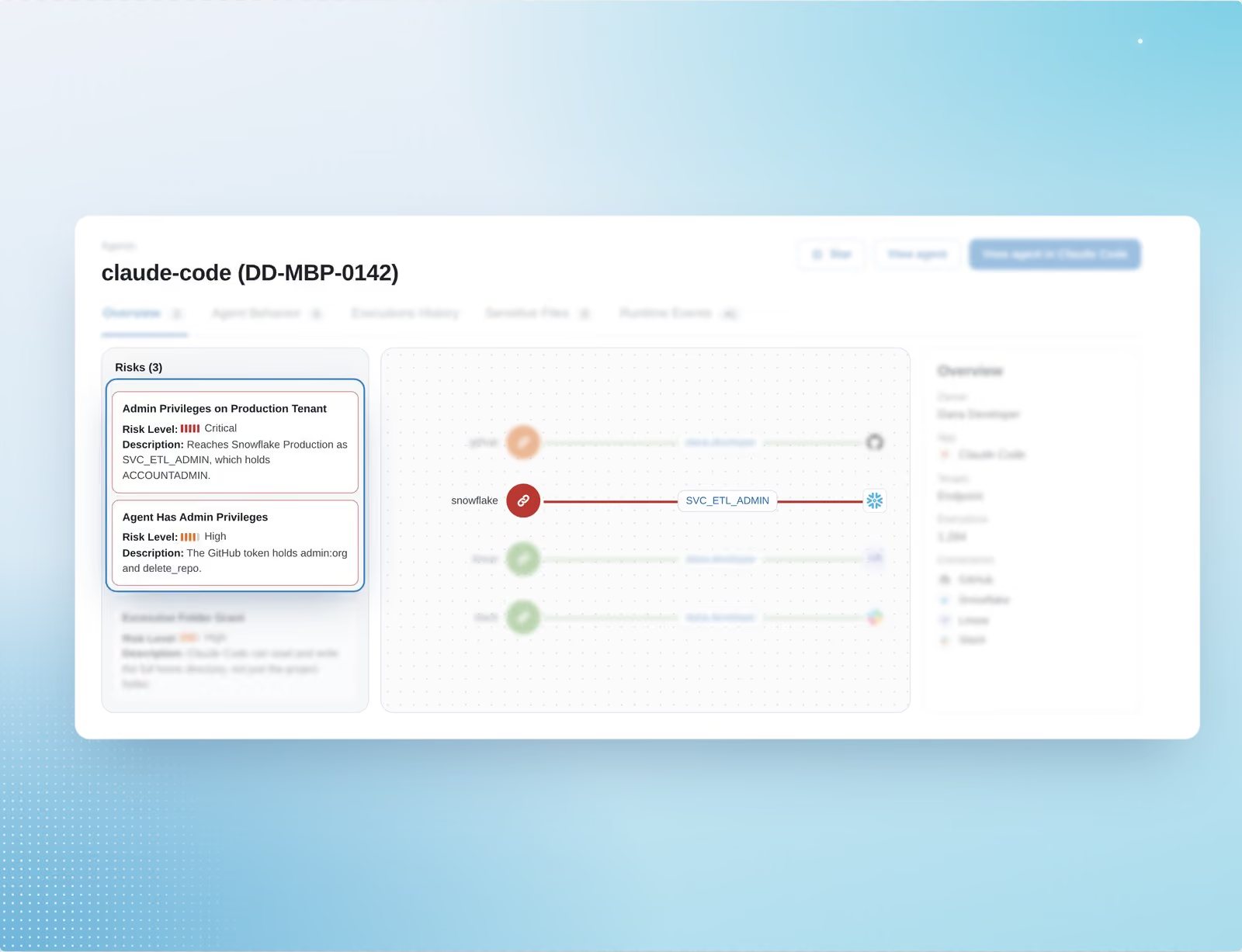
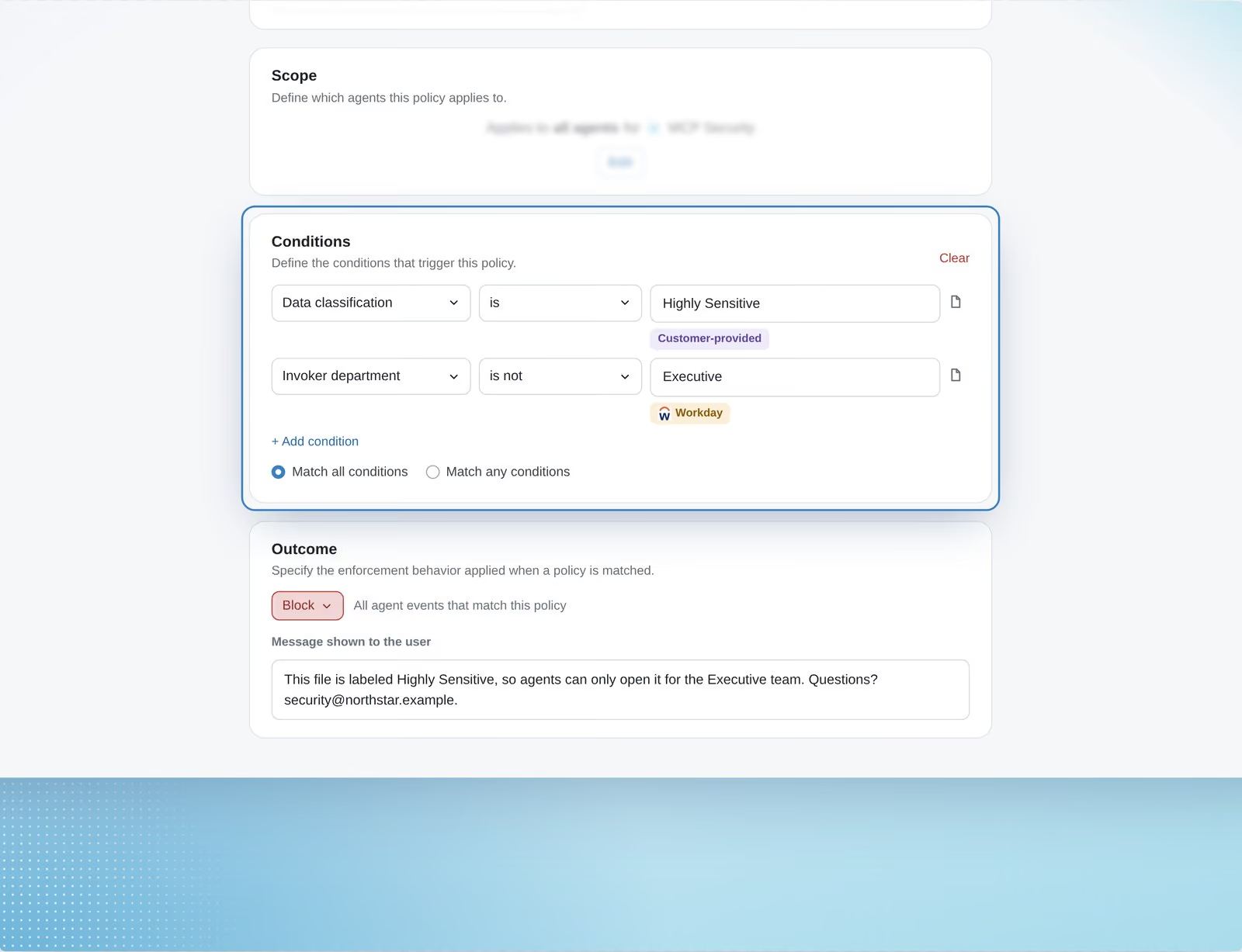
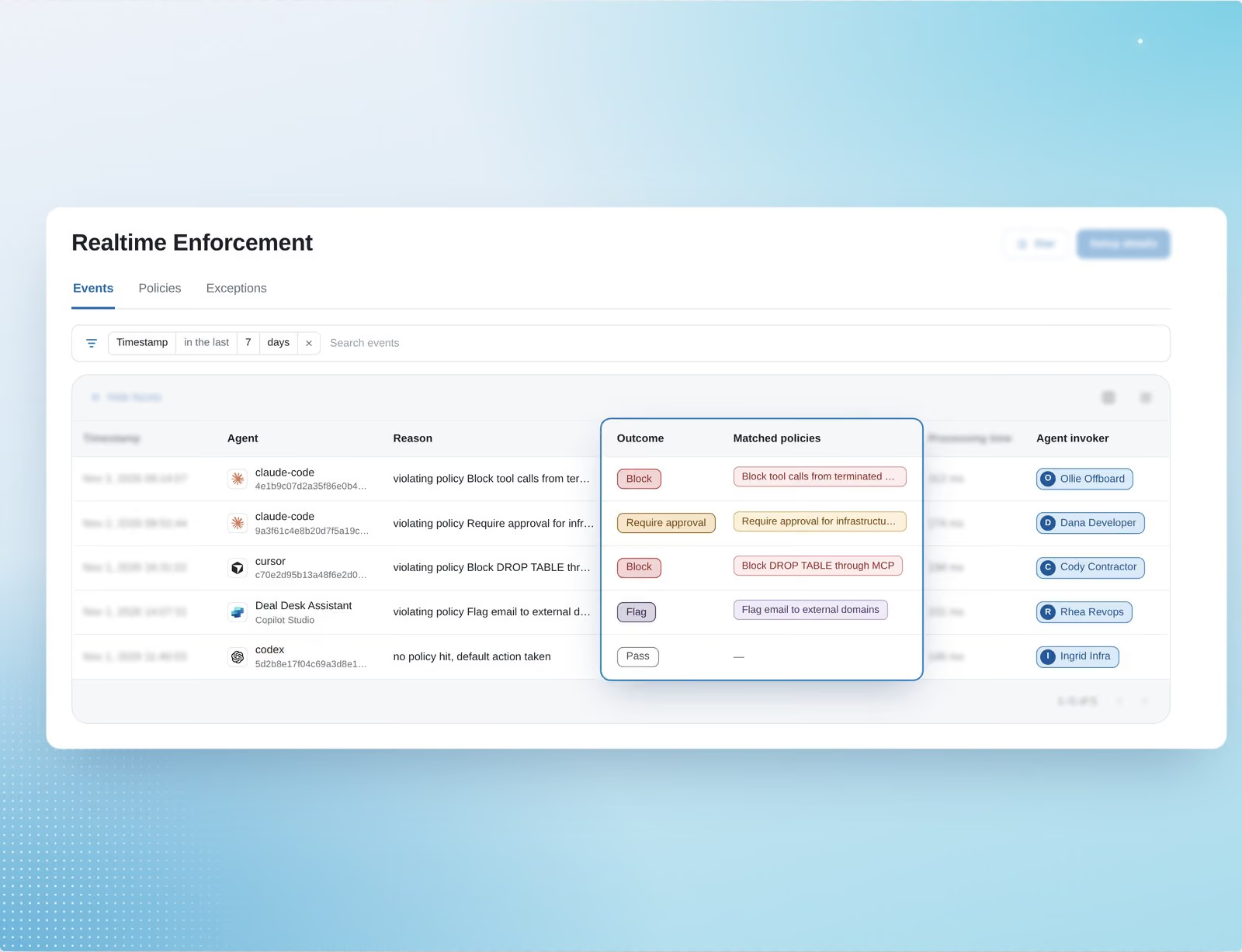
Obsidian evaluates supported agent actions against your policies, using the context behind each request to decide what runs, what gets blocked, and why.
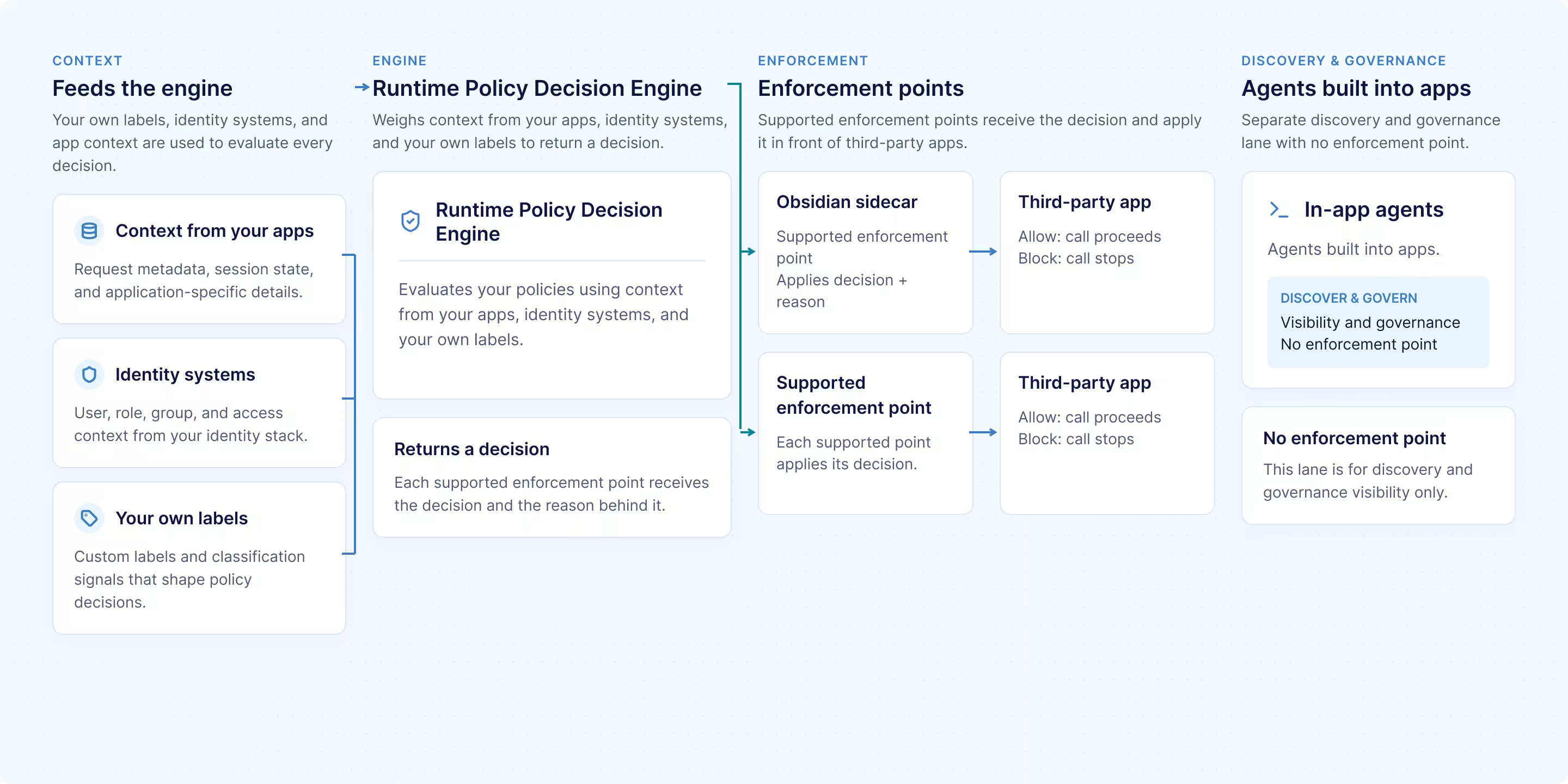
Different teams use different agent tools. Obsidian applies the same policies across supported enforcement points, so security stays consistent without slowing teams down.
Knowing an agent exists isn’t knowing what it can do. Obsidian connects each agent to the service accounts it runs as, the MCP servers it connects through, the permissions it holds in each app, and the person behind it, and uses available context in its runtime decisions.
No. Runtime enforcement applies at supported enforcement points: Claude Code, Cowork, and Codex through a sidecar, Microsoft Copilot Studio through a webhook, supported apps through the MCP Security Proxy, and your own gateways through the Policy Decision API. Platforms such as Salesforce Agentforce, Amazon Bedrock, and n8n are covered by discovery and governance.
Flag, require approval, or block. Flag records a match without acting, and an action that matches no policy proceeds. Require approval is available where the enforcement point supports it, which today means Claude Code policies that run before an operation.
No. The API returns a decision and its reason, and your gateway, agent harness, or workflow applies it. You keep the gateways you already run.
A policy acts only on the actions that match its conditions, and actions that match no policy proceed. Flag mode lets you see what a policy would catch before it affects anyone.
It works alongside them. Your EDR covers agents running on devices, network gateways inspect AI traffic, cloud security covers the infrastructure under your AI, and your identity provider gives agents their logins. Obsidian covers what agents can reach and do inside your third-party apps, and the Policy Decision API lets the gateways you already run enforce its decisions.
Most teams start with discovery, because they don’t yet have a reliable inventory of the agents in their environment. Governance then narrows each agent’s access, and runtime policies run in Flag mode before they block anything.