Claude and Copilot agents are now reading, writing, and deleting inside the third-party applications AppOmni was built to score for posture. Posture findings alone won't tell you who acted, what moved, or where it landed.
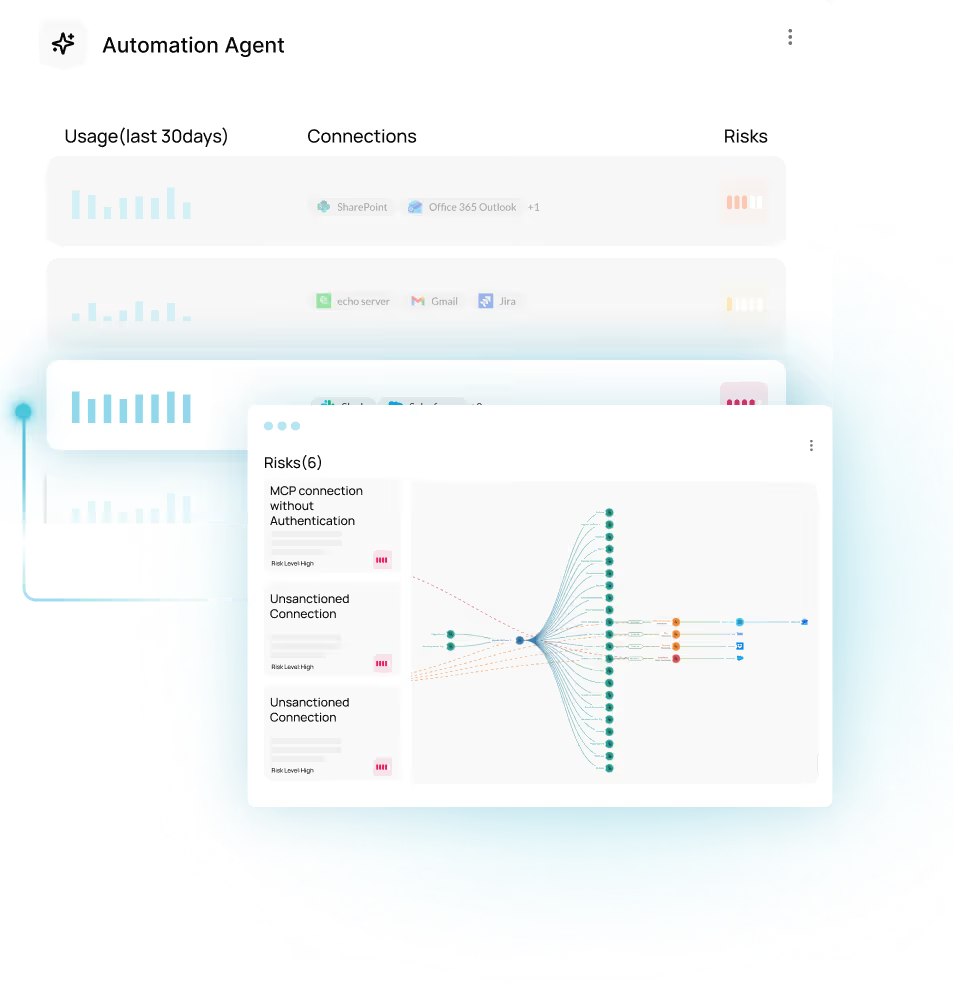
AppOmni is built around posture: configuration drift, baseline policy, compliance mapping. Obsidian secures third-party applications and AI agents as one system, with the activity evidence to close what posture only opens.
If posture alone isn't covering your AI agent and third-party application risk anymore, switching doesn't have to mean a lapse in coverage or a wasted contract. We support teams making the move, including buyout support on what you've already committed to.
Obsidian stands up alongside your current tool. No gap in coverage while you evaluate.
We'll work through what's left on your current contract and what a transition looks like for your specific terms.
Move fully to Obsidian once posture, threat detection, and agent governance are validated for your environment.
Buyout terms are evaluated case by case based on your current contract and are not guaranteed for every account. Ask your Obsidian contact for specifics.
Posture is necessary, it's not sufficient. AppOmni surfaces what's misconfigured. The investigation work that closes findings, who exploited it, what data moved, where the blast radius landed, routes through SIEM. Obsidian gives you posture plus the activity data underneath, in one platform.
Both, in one platform. Obsidian discovers every Claude, Copilot, and other agent connected to your third-party estate, maps what it can access, and enforces policy at runtime, alongside standard SaaS posture and supply chain coverage.
We work through what's remaining on your current AppOmni, Reco, or CrowdStrike contract and structure the transition around it. Specifics depend on your contract and are handled directly with your Obsidian contact, not published terms.
Obsidian is designed to run in parallel with your current tool during evaluation, so there's no coverage gap. Most teams validate posture, threat detection, and agent governance before fully cutting over.