SaaS Security for Tableau

Why Tableau Needs SaaS Security

Trying to protect SaaS without the right tools or context adds complexity and ignores risk:

  • Manual review does not scale: Security settings and permissions are unique for every vendor, demanding significant time and expertise to manage across SaaS
  • SaaS requires continuous monitoring: Access and privileges persist and evolve beyond intended use without monitoring or lifecycle enforcement, growing the attack surface
  • Disparate security leaves gaps: No centralized visibility or control over third-party app authorizations, OAuth scopes, or integration activity can leave risks unnoticed
  • Attackers are focused on SaaS: Compromise of high-privilege tokens or integrations can grant attackers persistent, organization-wide access to sensitive data

How Obsidian Security Defends Tableau

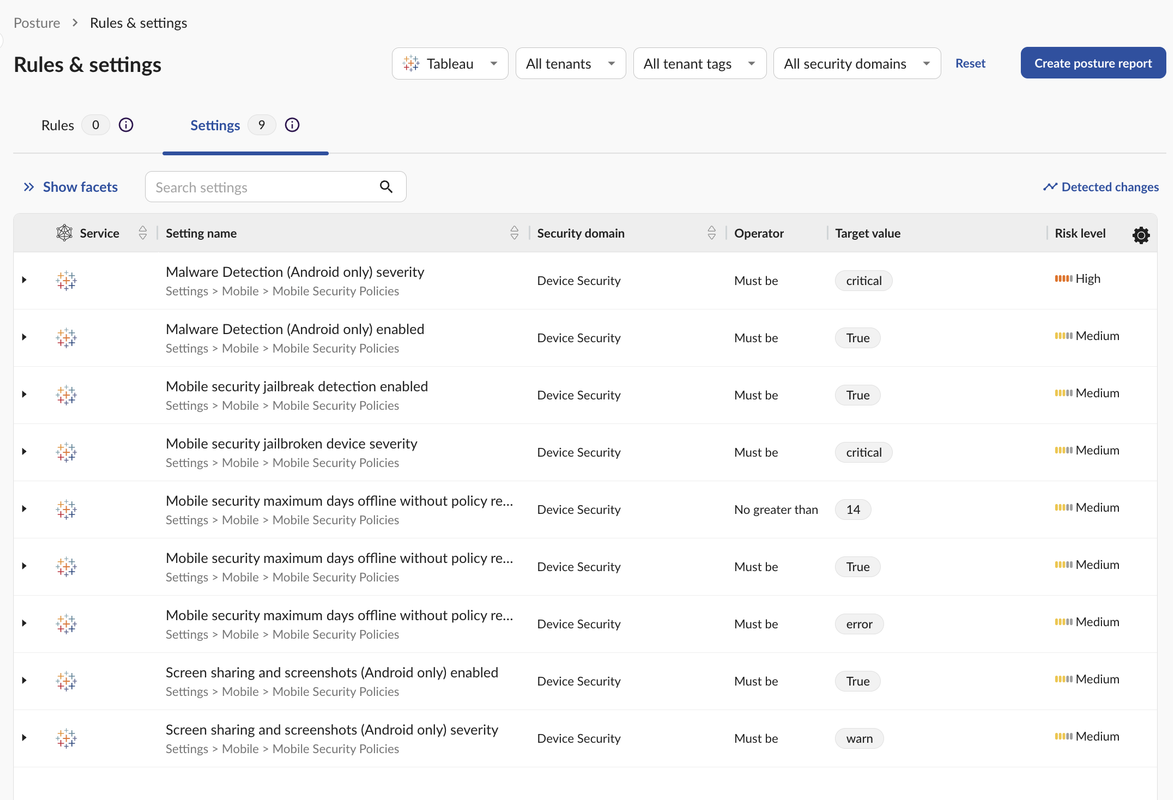
  • Continuously enforce secure SaaS configurations: Obsidian scores configurations based on criticality according to built-in or custom policies and flags high-priority failures.
  • Prioritize instantly with evidence-based posture alerts: Reduce business friction while minimizing unacceptable risk within a unified interface.
  • Right-size privileged access and SaaS integrations: The Obsidian Knowledge Graph unifies identity across SaaS to flag weak MFA, inactive accounts, shadow admins, and overly broad scopes, human or non-human.
  • Automate SaaS audits to easily prove compliance: Track SaaS posture in real time and map controls to frameworks like SOC 2, ISO 27001, CIS, and NIST.

Related Resources

Incident Watch Cover

Incident Watch Cover